Photo: Ian Duffy via Wikimedia Commons (CC-BY-SA 2.0)

Gentoo Penguin
Pygoscelis papua
Near ThreatenedOverview
The gentoo penguin is the fastest underwater penguin, reaching speeds of 36 km/h (22 mph) — making it the Olympic sprinter of the penguin world. Recognizable by the broad white patch across the top of its head and its orange-red bill, the gentoo is also the most adaptable of the brush-tailed penguins (genus Pygoscelis), with a diet that shifts readily between fish, squid, and krill depending on what's available.
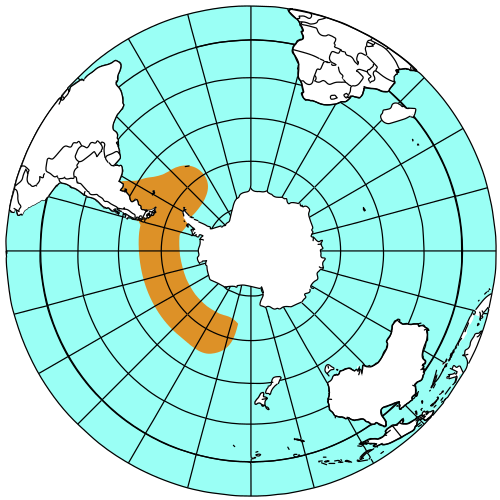
Gentoos breed on ice-free ground across subantarctic islands — the Falklands, South Georgia, the Kerguelen Islands, and many others — and are increasingly found nesting on the Antarctic Peninsula as warming temperatures open up new breeding habitat. Their colonies are built from stones and vegetation, and like Adélies, they're enthusiastic pebble collectors — though gentoos are more likely to steal from their neighbors than gather their own.
Their conservation story is one of the most complicated among penguins. While the global population is increasing and their range is expanding southward — seemingly good news — this expansion is directly driven by the same climate change that's devastating ice-dependent species like the emperor and chinstrap penguins. Gentoos are benefiting from a crisis that's reshaping the entire Antarctic ecosystem.
IUCN Status
The gentoo penguin is classified as Near Threatened on the IUCN Red List (2025 assessment). Despite a global population that's increasing — roughly 387,000 breeding pairs and growing — the species faces significant regional variation. Some subantarctic populations are declining, while the rapidly expanding Antarctic Peninsula populations mask these local losses in the aggregate numbers.
The Near Threatened listing reflects concern that the species' reliance on a relatively small number of breeding sites, combined with increasing disturbance from tourism and fishing, could push it toward vulnerability if conditions change. The apparent population growth may also be a temporary artifact of ice retreat that could reverse if warming accelerates beyond the gentoos' tolerance.
Colony Data Available
Colony data sourced from MAPPPD (Mapping Application for Penguin Populations and Projected Dynamics). Visit penguinmap.com for full interactive data.
Conservation
The gentoo penguin's story challenges simple narratives about climate change and wildlife. While other Antarctic penguins are declining, gentoos are thriving in newly ice-free areas — but this "success" comes with important caveats. Their expansion is a symptom of ecosystem disruption, not recovery. The same warming that creates new gentoo nesting sites is destroying the sea ice that krill, fish, and other penguin species depend on.
In the Falkland Islands, the world's largest gentoo population faces different threats: disease outbreaks (particularly avian cholera), oil pollution from shipping lanes, and increasing disturbance from eco-tourism. Colony visits by tourists, while well-regulated, can cause breeding disruption when guidelines aren't followed.
Their dietary flexibility is both a strength and a vulnerability. Gentoos can switch prey when krill is scarce, giving them a buffer that specialists like chinstraps lack — but if fish stocks are also depleted by commercial fishing, even the opportunistic gentoo will struggle. Long-term conservation depends on protecting the marine food web as a whole, not just individual species in isolation.
Sources
- IUCN Red List — Pygoscelis papua (Near Threatened, 2025 assessment)
- BirdLife International — global authority on bird conservation status
- Wikipedia — Gentoo penguin
- Wikimedia Commons — Photo source
- MAPPPD — Penguin colony tracking data