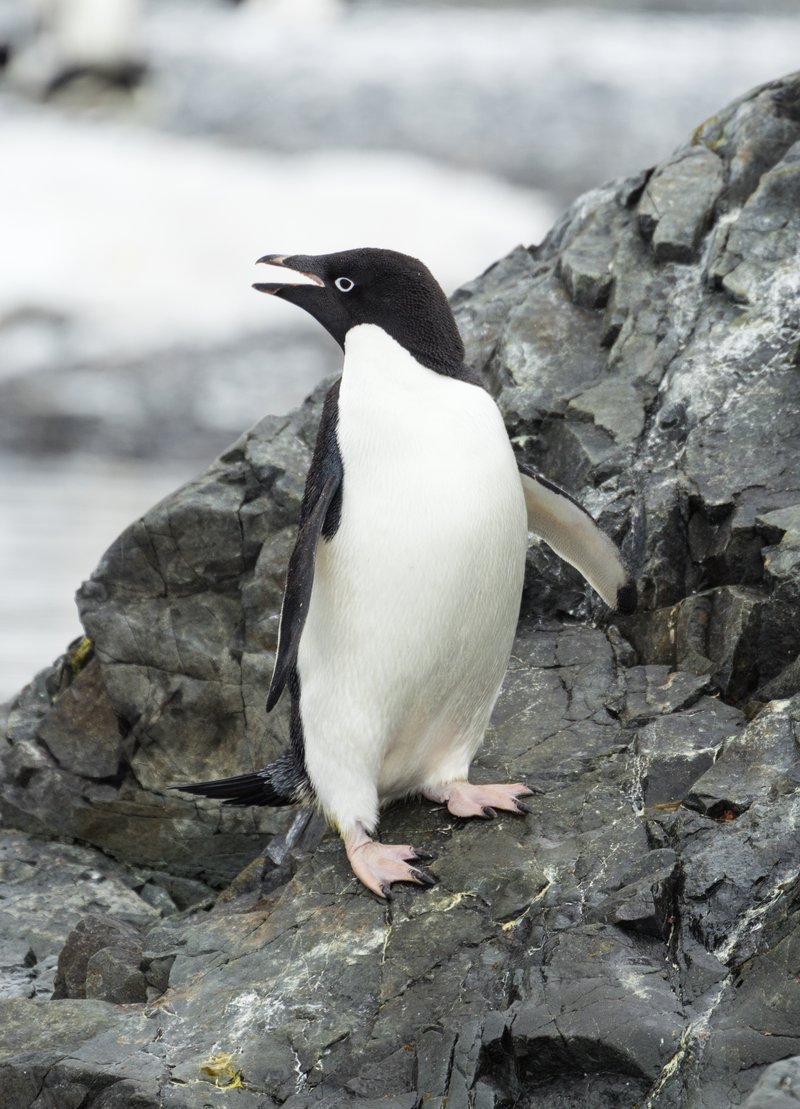
Photo: Liam Quinn via Wikimedia Commons (CC-BY-SA 2.0)

Adélie Penguin
Pygoscelis adeliae
Near ThreatenedOverview
The Adélie penguin is the most widespread penguin species in Antarctica, found along the entire coast of the continent and on nearby islands. Named after Adélie Land — itself named for Adèle Dumont d'Urville, wife of the French explorer who first discovered the species in 1840 — these compact, energetic birds are the classic image of a penguin: black back, white front, distinctive white ring around each eye.
Adélie penguins breed during the Antarctic summer on ice-free rock, building nests from pebbles that they carefully collect and guard. Pebble theft is a common and dramatic affair in Adélie colonies, with individuals sneaking stones from neighbors when they get the chance. Colonies can number in the hundreds of thousands, creating an overwhelming sensory experience of sound and smell along the Antarctic coast.
Their story is complicated by climate change in ways that defy simple narratives. As sea ice retreats around the Antarctic Peninsula, Adélie colonies there have declined — but further south, in the Ross Sea and East Antarctica, some colonies are growing as previously ice-bound breeding sites become accessible. The net result is a species that is locally declining in some regions while expanding in others.
IUCN Status
The Adélie penguin is classified as Near Threatened on the IUCN Red List (2025 assessment). While the global population remains large at approximately 7.5 million individuals, regional declines around the Antarctic Peninsula and projected future habitat loss from climate change have raised conservation concern. The species could move to a higher threat category if warming continues at current rates.
Particular concern focuses on colonies in the western Antarctic Peninsula region, where warming has been among the fastest on Earth — approximately 3°C over the past 50 years. These colonies have experienced significant population declines linked to reduced krill availability and changing sea ice conditions.
Colony Data Available
Colony data sourced from MAPPPD (Mapping Application for Penguin Populations and Projected Dynamics). Visit penguinmap.com for full interactive data.
Conservation
Adélie penguins face a dual conservation reality. In the Antarctic Peninsula region, colonies are declining as warming waters reduce krill populations — the foundation of the Antarctic food web. Krill rely on sea ice for winter habitat, and as ice retreats, krill abundance drops, leaving Adélies and other krill-dependent species with less food.
Conversely, some East Antarctic and Ross Sea colonies are growing or stable, as retreating ice opens new breeding habitat. This geographic split makes the species' overall trajectory hard to summarize — but the trend toward warming is accelerating, and the long-term outlook for even currently thriving colonies is uncertain.
Competition with commercial krill fisheries is an emerging concern. As krill becomes more valuable for aquaculture feed and omega-3 supplements, fishing pressure near penguin foraging grounds increases. The Commission for the Conservation of Antarctic Marine Living Resources (CCAMLR) manages krill catches, but enforcement and real-time monitoring remain challenges.
Sources
- IUCN Red List — Pygoscelis adeliae (Near Threatened, 2025 assessment)
- BirdLife International — global authority on bird conservation status
- Wikipedia — Adélie penguin
- Wikimedia Commons — Photo source
- MAPPPD — Penguin colony tracking data